
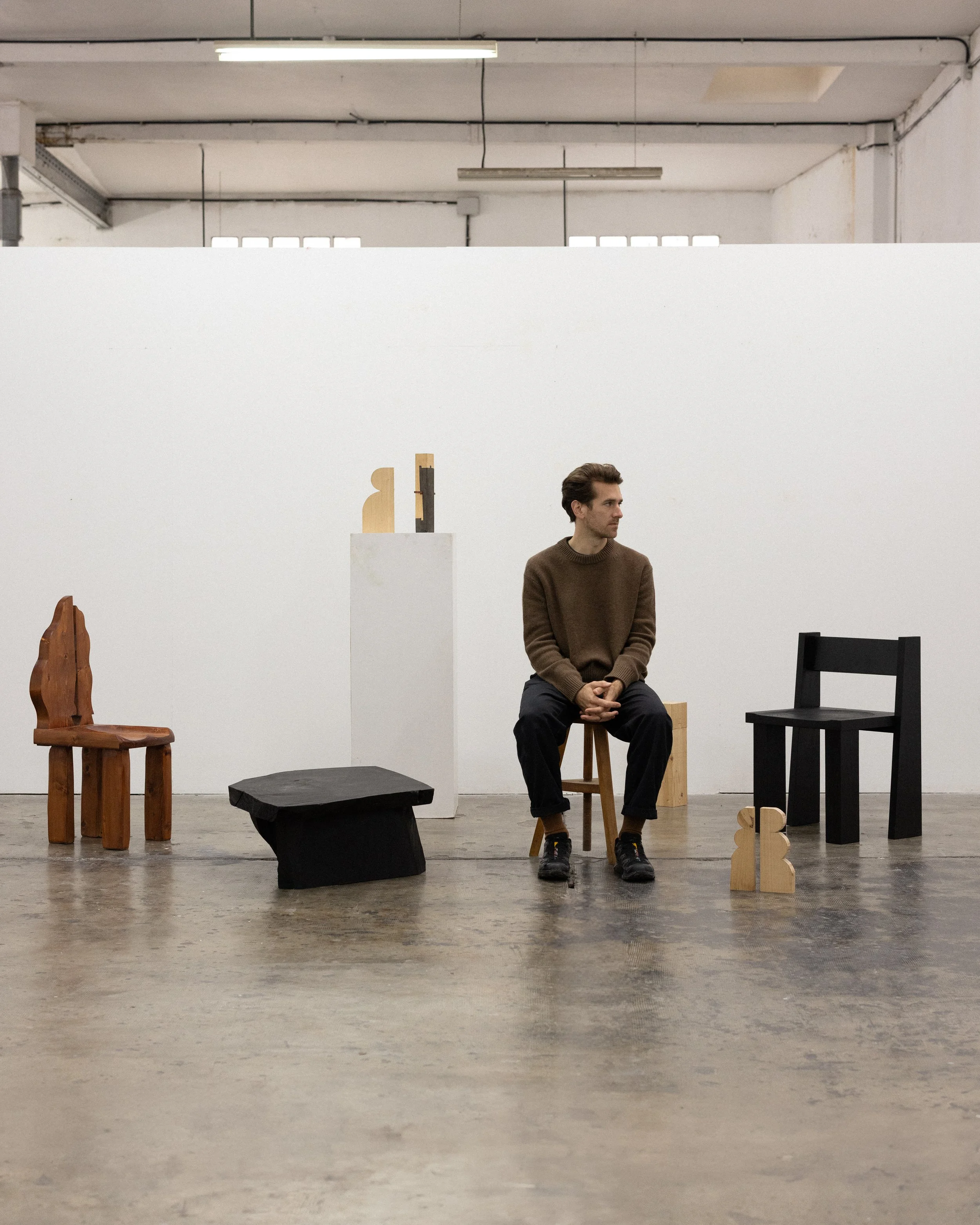
At the centre of my craft is a deep respect for detail and for the stories carried within materials, forms, and traditions. I am drawn to objects and structures that reveal their lineage—pieces that show where they come from, how they were built, and which cultural language shaped them. My work begins with this fascination for history, not as nostalgia, but as an evolving vocabulary that continues to inform contemporary design.
I was raised in Nova Scotia, a place defined by shipbuilding, timber framing, and a landscape of spruce, oak, maple, and birch. The large-format joinery of our shipwrights and the hewn structures of the past formed my earliest understanding of construction. They also taught me something essential: that design once grew directly from environment, necessity, and material character. Much of this has been displaced by prefabrication, but the underlying knowledge remains deeply valuable.
Over the past fifteen years, I have sought out craftspeople, workshops, and traditions across Europe, Japan, and Canada to study how different cultures solve problems of structure, proportion, and beauty. I have traced the development of traditional housebuilding across Europe and Japan, looking at how methods emerged from the climates, landscapes, and beliefs of each place. These systems of making translate naturally into furniture—both in function and in aesthetic.
My work carries these influences while remaining rooted in restraint. I try to explore only one or two ideas at a time, allowing the piece to be defined by the harmony of its parts rather than ornamentation. Much of the complexity is hidden in the joinery, proportions and finishing techniques.
I want my furniture to invite discovery. Sometimes this means a visible tool mark, a deliberate recess, an exposed joint, or the way a particular angle resolves itself. These small decisions carry as much weight as the overall form. Ultimately, my practice stands at the intersection of the traditions that shaped me: the practicality and honesty of Canadian craft, centuries of European construction knowledge, and the Japanese attention to subtlety, proportion, and detail.
My goal is to create work that feels grounded, intentional, and connected to a larger lineage—pieces that reflect where they come from while speaking clearly in the present.
Otra Objects is a research based design studio in Barcelona, lead by designer & artist Rian Davidson.